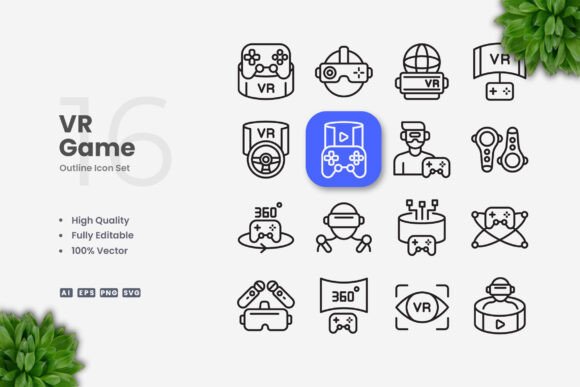
VR Game Icons and the Power of Simple, Clean Design
In today’s digital world, visual elements play a crucial role in user engagement and brand recognition. For developers, designers, and content creators working with virtual reality (VR) games, having high-quality, customizable icons is essential. VR game icons not only enhance the overall look of your project but also serve as intuitive navigation tools for users. Whether you're designing a mobile app, a website, or a print brochure, simple and clean icon design can make a significant difference in how your product is perceived.
When it comes to creating effective VR game icons, simplicity is often the key. A clean design allows for quick recognition, especially in environments where users may be interacting with multiple elements at once. This clarity ensures that players can easily identify and access different functions within a VR experience. The right iconography can also help maintain a cohesive visual language across various platforms and mediums.
Why Choose High-Quality, Vector-Based Icons?
High-quality, vector-based icons are the gold standard for designers who need flexibility and scalability. Unlike raster images, which lose quality when resized, vector graphics maintain their sharpness at any size. This makes them ideal for use across different devices and formats, from mobile apps to large banners and posters.
For VR game icons, this level of quality is particularly important. Players often view these icons on screens of varying sizes and resolutions, and a poorly designed icon can become blurry or distorted. With 100% vector-based files, you can confidently scale your icons without worrying about pixelation or loss of detail.
Moreover, vector files offer complete customization. You can change colors, adjust stroke weights, and modify shapes using popular design software like Adobe Illustrator or CorelDRAW. This level of editability ensures that your icons can adapt to different branding needs or aesthetic preferences over time.
The Benefits of Editable Stroke and Customizable Design
One of the standout features of modern VR game icons is the ability to edit strokes. This means you can fine-tune the thickness and style of lines to match your design vision. Whether you want a bold, minimalist look or a more intricate, detailed style, editable strokes give you the control you need to achieve the desired effect.
Customizability extends beyond just stroke weight. With source files in formats like AI, EPS, SVG, and PNG, you have the freedom to tweak every aspect of your icons. This is especially useful for developers and designers who need to integrate icons into existing projects or align them with specific color schemes.
For example, if you're creating a VR game that has a dark theme, you can easily adjust the icon colors to fit that aesthetic. Similarly, if you’re designing a marketing flyer, you can change the stroke weight to ensure the icons stand out against the background.
Easy Integration and File Compatibility
Modern VR game icons come with a variety of file formats to suit different needs. Source files in Adobe Illustrator (AI) allow for full editing capabilities, while EPS Version 10 ensures compatibility with older design software. SVG files are perfect for web use, offering scalable resolution and lightweight performance. PNG files with transparent backgrounds are ideal for digital marketing materials, such as social media posts or website banners.
This wide range of file options makes it easy to incorporate VR game icons into your workflow, regardless of the platform or project you're working on. Whether you're building a mobile app, designing a website, or preparing a print campaign, you’ll find the right format to meet your requirements.
Additionally, most icon sets include a README.txt file that provides instructions on how to use and customize the files. This helps streamline the process, even for those who are less familiar with vector design software.
Practical Applications of VR Game Icons
VR game icons are not limited to just video games. Their versatility makes them suitable for a wide range of applications. In mobile apps, they can serve as buttons or navigation elements, helping users quickly find what they need. On websites, they can be used to highlight key features or guide visitors through interactive content.
In books and infographics, VR game icons can visually represent complex concepts in an easy-to-understand way. They can also be used in social media posts to add visual interest and reinforce brand identity. For print materials like flyers, banners, and posters, these icons provide a professional and polished look that catches the eye.
Consider a scenario where you're developing a VR fitness app. Using custom-designed icons can help users navigate through different workout sessions, track progress, and access settings. These icons can also be adapted for use in marketing materials, making it easier to promote the app across various channels.
Choosing the Right Icon Set for Your Project
When selecting VR game icons, there are several factors to consider. First, think about the purpose of the icons. Are they meant for navigation, representation, or decoration? Understanding the function will help you choose the right style and complexity.
Next, consider the target audience. If your project is aimed at a younger demographic, you might prefer a more playful and vibrant design. For a professional or corporate setting, a minimalist and elegant approach may be more appropriate.
Also, evaluate the technical requirements of your project. Do you need icons that are compatible with specific design software or file formats? Ensuring that the icon set meets these criteria can save time and prevent unnecessary complications during the development process.
Finally, look for icon sets that offer a good balance between quality and affordability. While free icon libraries can be useful, paid sets often provide higher quality, more customization options, and better support for different use cases.