Stakeholder Icons: A Versatile Design Solution for Modern Projects
In today's digital and visual-centric world, icons play a crucial role in communication. Whether you're designing a website, mobile app, or a printed brochure, the right icon can make all the difference. Stakeholder Icons are a powerful tool that offers high-quality, customizable vector graphics perfect for a wide range of applications. From social media to infographics, these icons are designed with simplicity and clarity in mind, making them ideal for both professionals and creators.
What Are Stakeholder Icons?
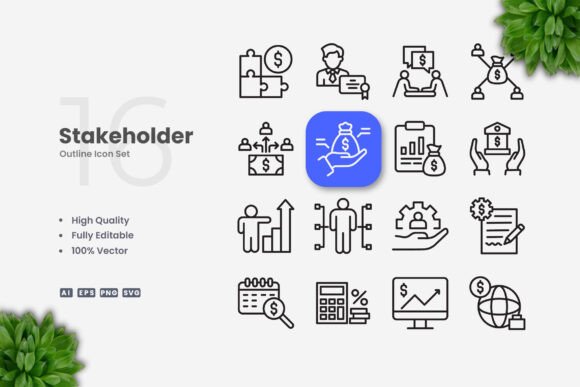
Stakeholder Icons are a collection of vector-based illustrations that represent various stakeholders in a business or project context. These icons are crafted with a clean and minimalistic design, ensuring they remain visually appealing across different platforms and mediums. Unlike generic icons, Stakeholder Icons are specifically tailored to reflect roles such as clients, investors, team members, and other key players in a project lifecycle.
The design philosophy behind Stakeholder Icons emphasizes usability and adaptability. Each icon is created with attention to detail, allowing users to easily recognize and interpret the intended meaning. This makes them particularly useful for businesses looking to communicate complex ideas through simple visual elements.
Key Features of Stakeholder Icons
- High Quality Design: Every icon is meticulously crafted to ensure sharpness and clarity at any size.
- 100% Vector Format: The icons are available in vector formats like AI, EPS, and SVG, allowing for seamless scalability without loss of quality.
- 100% Customizable: Users can modify colors, stroke weights, and other properties to match their brand identity or specific project needs.
- Editable Stroke: The ability to adjust stroke weight gives designers greater control over the visual impact of each icon.
- Easy Drag and Drop: The file structure is organized for quick integration into design projects, saving time and effort.
Where Can Stakeholder Icons Be Used?
The versatility of Stakeholder Icons makes them suitable for a wide array of applications. Here are some common use cases:
- Websites: Use these icons to enhance user interfaces, represent different sections, or illustrate stakeholder roles on landing pages.
- Mobile Apps: Integrate them into app designs to improve navigation and user experience by clearly indicating functions or roles.
- Books and E-books: Incorporate them into educational or business-related content to visually support concepts and ideas.
- Social Media: Add them to posts, banners, or profile visuals to create a cohesive and professional look.
- Infographics: Use them to simplify complex data or processes by representing stakeholders in a clear and engaging way.
- Flyers, Banners, and Posters: Enhance print materials with visually striking icons that capture attention and convey messages effectively.
Who Benefits from Stakeholder Icons?
Stakeholder Icons are beneficial for a broad audience, including:
- Business Owners: These icons help in creating professional presentations, marketing materials, and internal documentation that clearly define roles and responsibilities.
- Designers and Developers: They offer a reliable and customizable resource for UI/UX projects, reducing the need to create icons from scratch.
- Professionals and Educators: Ideal for creating training materials, reports, and presentations that require clear visual representation of stakeholders.
- Content Creators: Useful for social media content, blogs, and videos where visual elements enhance storytelling and engagement.
Strengths and Considerations
One of the main strengths of Stakeholder Icons is their flexibility. The ability to edit colors, strokes, and sizes allows users to tailor the icons to fit their specific needs. Additionally, the availability of multiple file formats ensures compatibility with various design software and platforms.
However, it’s important to note that while these icons are highly customizable, they may not be suitable for every project. For instance, if a project requires a more abstract or unique style, Stakeholder Icons might not provide the desired aesthetic. It’s also essential to consider licensing terms to ensure proper usage rights, especially for commercial projects.
Real-World Applications
Consider a scenario where a startup is developing a new app. The team could use Stakeholder Icons to visualize the different roles involved in the project, such as developers, designers, and investors. By incorporating these icons into their pitch deck, the startup can clearly communicate the structure and dynamics of their team, making it easier for potential investors to understand the project’s scope and goals.
Another example is a company creating an internal training program. Using Stakeholder Icons in the training materials can help employees better understand the roles and responsibilities of various departments within the organization. This not only improves comprehension but also enhances the overall learning experience.
Evaluating Suitability
When considering whether Stakeholder Icons are right for your project, it’s helpful to ask a few key questions:
- Does your project require clear and recognizable visual representations of stakeholders?
- Are you looking for a solution that is easy to customize and integrate into your workflow?
- Do you need icons that can be used across multiple platforms and formats?
If the answer to these questions is yes, then Stakeholder Icons could be an excellent choice. However, it’s always wise to explore other options and compare features to ensure the best fit for your specific needs.
Conclusion
Stakeholder Icons offer a practical and efficient solution for anyone looking to enhance their visual communication. With their clean design, high-quality vector format, and extensive customization options, they are well-suited for a variety of projects and industries. Whether you're a designer, business owner, or educator, these icons can add value to your work by providing clear and professional visual elements. As with any design resource, it’s important to evaluate your needs and choose the right tools to achieve your goals effectively.