Exploring the Versatility of Plates Icons for Digital and Print Projects
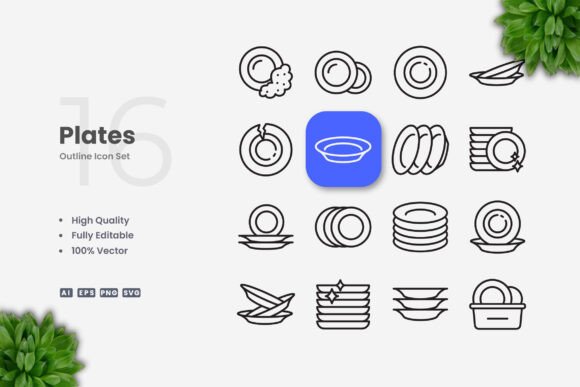
Plates Icons offer a unique blend of simplicity and functionality, making them an ideal choice for a wide range of design projects. Whether you're working on a website, mobile app, or print material, these icons provide a clean and professional look that can enhance any visual composition. Their customizable nature allows designers to adapt them to various styles and requirements, ensuring they fit seamlessly into different creative workflows.
The design philosophy behind Plates Icons emphasizes minimalism without sacrificing clarity. Each icon is crafted with precision, ensuring that even the most intricate details are visible at smaller sizes. This attention to detail makes them suitable for both high-resolution displays and low-pixel environments, offering versatility across platforms.
Key Features of Plates Icons
One of the standout features of Plates Icons is their vector-based format. With 100 vector files included, users have the flexibility to scale the icons to any size without losing quality. This makes them particularly useful for projects that require multiple resolutions, such as responsive web design or print materials that may need to be resized for different formats.
Customization is another major advantage of Plates Icons. The ability to change colors, adjust stroke weights, and modify other visual elements ensures that the icons can be tailored to match specific brand guidelines or project aesthetics. This level of adaptability is especially valuable for designers who need to maintain a cohesive visual identity across various mediums.
The availability of multiple file formats further enhances the usability of Plates Icons. Users can access source files in Adobe Illustrator (AI), EPS Version 10, SVG, and PNG formats with transparency. This ensures compatibility with a wide range of design software, allowing for easy integration into existing workflows. Additionally, the inclusion of a Readme.txt file provides clear instructions for using and organizing the icon set, streamlining the design process.
Applications Across Different Industries
Plates Icons find applications in numerous industries, from digital product design to marketing and education. In web development, they can be used to create intuitive navigation systems, interactive elements, and user interface components. Their clean design ensures that they remain visually appealing while maintaining readability, which is essential for user experience.
In mobile app development, Plates Icons help streamline the design process by providing a consistent visual language. Developers and designers can quickly implement these icons to represent functions, settings, or actions within an application. The ease of drag-and-drop integration also saves time, allowing teams to focus on other aspects of the project.
For print media, such as flyers, posters, and banners, Plates Icons offer a professional and polished look. Their scalability ensures that they remain sharp and clear regardless of the size at which they are printed. This makes them a reliable choice for promotional materials that need to capture attention while conveying information effectively.
Benefits for Designers and Creators
Designers benefit from the flexibility and efficiency that Plates Icons provide. The ability to edit stroke weight and color directly in vector software like Adobe Illustrator or CorelDRAW allows for precise adjustments without compromising the integrity of the original design. This level of control is essential for achieving the desired visual outcome in any project.
Moreover, the simplicity of the icon style reduces the learning curve for new users. Unlike more complex icon sets, Plates Icons are straightforward to understand and apply, making them accessible to both novice and experienced designers. This accessibility encourages broader adoption and use across different skill levels.
Another significant benefit is the time savings associated with using pre-designed icons. Instead of creating custom illustrations from scratch, designers can leverage Plates Icons to accelerate the design process. This is particularly useful for projects with tight deadlines or those requiring rapid prototyping.
Considerations for Effective Use
While Plates Icons are highly versatile, it's important to consider how they will be used in the final design. For instance, when incorporating them into a website or app, it's crucial to ensure that they align with the overall design system. This includes matching color schemes, typography, and spacing to maintain a cohesive look and feel.
Additionally, designers should test the icons in different contexts to ensure they remain legible and functional. For example, some icons may appear too small or lose detail when scaled down, so it's essential to review them at various sizes before finalizing the design. This step helps prevent potential issues that could affect user experience.
When using Plates Icons for print projects, it's advisable to check the resolution and color profiles to ensure that the final output meets the required standards. High-quality prints demand accurate color representation and sharp details, which can be achieved by following best practices for vector file usage.
Best Practices for Integration
To maximize the effectiveness of Plates Icons, it's recommended to organize them systematically. Creating folders or categories based on function, theme, or usage can make it easier to locate and apply the right icons during the design process. This organization also helps maintain consistency across different projects.
Collaboration is another area where proper management of Plates Icons can improve efficiency. When working with a team, sharing a well-structured icon library ensures that everyone has access to the same resources. This reduces the risk of inconsistencies and streamlines the workflow, especially in larger design projects.
Finally, staying updated with new releases and variations of Plates Icons can provide additional value. As design trends evolve, new icon styles or features may become available, offering fresh opportunities for creativity and innovation. Keeping an eye on these updates ensures that designers can continue to leverage the latest tools in their work.