Digital Imaging Icons: A Versatile Design Solution
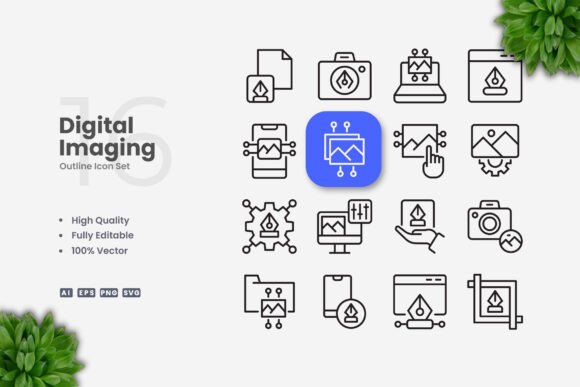
Digital Imaging Icons are a collection of visual elements designed to represent various functions, actions, or concepts in digital and print media. These icons are typically created using vector graphics, allowing for scalability without loss of quality. They serve as a crucial component in user interface (UI) design, helping users navigate through applications, websites, and other digital platforms with ease.
For designers, developers, and content creators, Digital Imaging Icons offer a practical way to enhance visual communication. Their simplicity and clarity make them ideal for a wide range of applications, including websites, mobile apps, books, social media, infographics, flyers, print materials, banners, and posters.
Why Consider Digital Imaging Icons?
There are several reasons why someone might be interested in Digital Imaging Icons. First, they provide a consistent visual language that can be easily understood across different platforms and audiences. This consistency is especially important in UI design, where users expect familiar symbols to perform specific tasks.
Another key advantage is the flexibility they offer. Digital Imaging Icons are often available in multiple formats, such as AI, EPS, SVG, and PNG, making them suitable for various uses. Whether you need a high-resolution image for print or a scalable vector for web use, these icons can adapt to your needs.
Additionally, the ability to customize these icons is a significant benefit. Users can change colors, adjust stroke weights, and resize the icons without compromising quality. This level of editability is particularly useful for brands that require a cohesive look across all their materials.
Benefits and Considerations
One of the primary benefits of Digital Imaging Icons is their high-quality design. Each icon is crafted to maintain clarity at any size, ensuring that it remains recognizable even when scaled down. This is essential for maintaining a professional appearance in both digital and print formats.
The 100% vector format ensures that the icons can be edited and modified using software like Adobe Illustrator or CorelDRAW. This makes them a powerful tool for designers who want to tailor the icons to their specific needs. The editable stroke feature adds another layer of customization, allowing for precise adjustments to the icon's outline.
Moreover, the inclusion of multiple file types—such as source files, EPS versions, SVG, PNG, and a README.txt—makes it easy to integrate these icons into different projects. The drag-and-drop functionality further simplifies the process, saving time and effort during the design phase.
Situations Where Digital Imaging Icons Excel
Digital Imaging Icons are particularly well-suited for projects that require a clean, modern aesthetic. They are ideal for websites and mobile apps where usability and visual appeal are paramount. In such environments, the icons help users quickly understand the purpose of each element, improving the overall user experience.
They are also beneficial for educational materials, such as books and infographics, where clear visual representations can aid in comprehension. For marketing purposes, these icons can be used in social media posts, banners, and posters to create visually engaging content that captures attention.
In print media, such as flyers and posters, Digital Imaging Icons ensure that the message remains clear and professional, regardless of the size or medium. Their transparency in PNG format allows for seamless integration into backgrounds, enhancing the overall design without overshadowing other elements.
When Alternatives Might Be Better
While Digital Imaging Icons offer many advantages, there may be situations where alternatives are more appropriate. For instance, if a project requires highly detailed or stylized graphics, custom illustrations might be a better choice. These alternatives can provide a unique look that aligns more closely with a brand’s identity.
Additionally, if the primary goal is to convey complex information, text-based content may be more effective than icons. Some concepts are better explained through words rather than symbols, especially in contexts where clarity is critical.
For those with limited design skills, pre-made icon sets may not offer enough customization options. In such cases, working with a designer or using more user-friendly tools could be a better approach. It’s also worth considering free icon libraries if budget constraints are a concern.
Practical Decision-Making Insights
When deciding whether to use Digital Imaging Icons, it’s important to evaluate your specific needs. Ask yourself whether the icons will enhance the user experience, meet the visual requirements of your project, and align with your brand’s style.
Consider the technical aspects as well. Ensure that the file formats provided are compatible with your workflow and that the icons can be easily edited if needed. Testing the icons in different contexts can also help determine their effectiveness.
Finally, think about the long-term value. High-quality, customizable icons can save time and resources by reducing the need for frequent redesigns. They can also contribute to a more cohesive and professional appearance across all your materials.