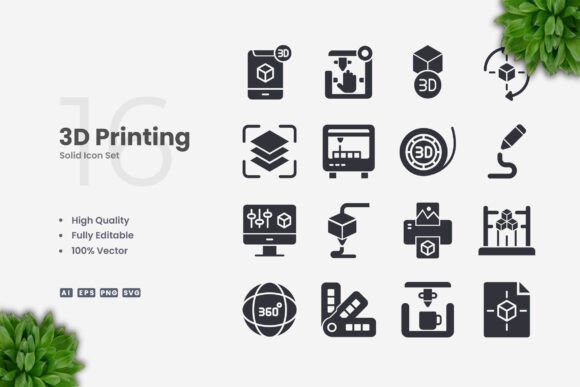
3D Printing Solid Icons for Modern Design Needs
3D printing solid icons have become a valuable asset in the world of design, offering a versatile and professional look that can be adapted across multiple platforms. These icons are designed with simplicity and clarity in mind, making them ideal for websites, mobile apps, books, social media, infographics, flyers, print materials, banners, and posters. Their clean lines and structured forms ensure they remain visually appealing while maintaining functionality across various mediums.
Designed as 100% vector graphics, these icons provide high-quality resolution regardless of size, allowing users to scale them without losing clarity. This makes them particularly useful for designers who need consistent visual elements across different formats and resolutions. Whether you're working on a digital project or a printed piece, 3D printing solid icons offer a reliable and professional appearance.
Why Consider 3D Printing Solid Icons?
For designers, developers, and content creators, 3D printing solid icons present a practical solution for maintaining visual consistency. The clean and simple design ensures that the icons remain recognizable even at smaller sizes, which is crucial for user interfaces and mobile applications. Additionally, their solid color style gives them a modern and minimalist aesthetic, aligning with current design trends.
The ability to easily customize these icons using vector software like Adobe Illustrator and CorelDRAW adds another layer of flexibility. Users can adjust colors, resize, or modify details without compromising quality. This level of adaptability makes them suitable for a wide range of projects, from branding initiatives to editorial content.
Key Features and Benefits
The features of 3D printing solid icons include a comprehensive set of files such as AI (Adobe Illustrator), EPS Version 10, SVG, PNG with transparency, and a README.txt file. These formats ensure compatibility with various design tools and platforms, making it easy for users to integrate the icons into their workflow.
- High Quality Design: Each icon is crafted with precision to maintain clarity and detail at any scale.
- 100% Vector: Ensures scalability without loss of quality, ideal for both digital and print use.
- 100% Customizable: Easily edit colors, shapes, and other elements to match specific design needs.
- Easy Drag and Drop: Streamlines the integration process into design projects.
- Source File Ai: Provides full control over the design for advanced customization.
- EPS Version 10: Offers compatibility with a wide range of graphic design software.
- SVG File: Enables seamless use in web-based projects and responsive designs.
- PNG Transparency: Allows for flexible placement on various backgrounds.
- Readme.txt: Includes helpful instructions for using and modifying the icons.
These features make 3D printing solid icons a powerful tool for professionals looking to enhance their design work efficiently.
Situations Where 3D Printing Solid Icons Excel
3D printing solid icons are particularly well-suited for projects that require a clean, modern, and scalable visual language. They are ideal for businesses looking to establish a strong brand identity through consistent iconography. For example, a mobile app developer may use these icons to create an intuitive and aesthetically pleasing user interface that remains clear and functional across different screen sizes.
Additionally, they are beneficial for print materials where high-resolution graphics are essential. Whether designing a flyer, poster, or banner, the vector format ensures that the icons maintain sharpness and clarity, regardless of how large or small they are printed.
For content creators and marketers, these icons can be used in infographics, social media posts, and promotional materials. Their simple design allows them to convey information quickly and effectively, enhancing the overall visual appeal of the content.
When Alternatives May Be More Suitable
While 3D printing solid icons offer many advantages, there are situations where alternative icon styles might be more appropriate. For instance, if a project requires a more detailed or stylized approach, flat or outlined icons could be a better fit. These alternatives often provide a unique visual identity that may better suit certain creative directions.
Moreover, if a designer is working within a specific theme or brand style that does not align with the minimalist nature of solid icons, exploring other options may be necessary. In some cases, animated icons or more complex 3D models could also be more effective, depending on the project's requirements.
It's also important to consider the target audience when choosing icon styles. Some audiences may respond more positively to bold, solid designs, while others may prefer more intricate or artistic representations.
Decision-Making Insights
When evaluating whether 3D printing solid icons are the right choice, it's essential to consider the project's goals, the intended audience, and the design context. If the primary focus is on clarity, scalability, and ease of customization, then these icons are likely a strong fit. However, if the design requires more complexity or a distinct visual style, further exploration of other options may be necessary.
Additionally, assessing the technical requirements of the project is crucial. For example, if the design will be used primarily online, ensuring compatibility with web formats like SVG and PNG is important. For print-based projects, verifying the availability of high-resolution EPS or AI files can help avoid potential issues during production.
Finally, considering the long-term usability of the icons is key. Choosing a format that allows for future modifications and updates can save time and effort down the line, especially for ongoing projects or evolving brand identities.
Ultimately, 3D printing solid icons offer a practical and versatile solution for a wide range of design needs. Their combination of quality, customization, and compatibility makes them a valuable resource for professionals across various industries. By carefully evaluating the specific requirements of a project, users can determine whether these icons align with their goals and contribute to the success of their design efforts.